A strong core is more than visible abdominal muscles. It is the support that helps you move with steadiness, coordinate your limbs, and meet everyday tasks with confidence. Classical Pilates, originally called Contrology, offers a thoughtful way to develop that support. Instead of isolating one muscle group, it teaches your body to organize and move as a connected whole. For beginners, the aim is not to perform the most challenging exercise. It is to find control, build consistency, and progress at a pace that respects your body.
What core strength really means
Your core includes more than your abdominal muscles. It involves muscles around your trunk, back, pelvis, and hips, working together to support your spine and coordinate movement.
In a useful core strength workout, your trunk needs to do more than flex. It also helps steady your body as your arms and legs move, and it adapts as you bend, reach, turn, and breathe. That is why good training is about control and coordination, not simply doing more repetitions.
Classical Pilates develops this through precise, flowing exercises and a structured sequence. You learn to notice your alignment, breathing, and movement quality, then build from there.
Start with control, not intensity
A beginner does not need to “feel the burn” to make progress. Start with movements you can perform smoothly, without holding your breath or gripping through your neck and shoulders.
Try these gentle starting points, moving slowly and stopping if you feel pain:
Breathing and awareness: Lie comfortably with knees bent. Take a few relaxed breaths, noticing how your ribs move as you inhale and exhale.
Small pelvic curls: Gently roll your pelvis so your lower back meets the mat, then return to a comfortable resting position. Keep the movement small and easy.
Leg slides: From the same position, slide one heel along the mat and return it, keeping your pelvis steady. Alternate sides.
Small leg circles: With one foot resting on the floor or the knee bent, make a small, controlled circle with the other leg. Keep the range comfortable.
These are "Pre-Pilates" ideas, not a complete classical sequence or a personalized exercise prescription. The right starting point depends on your experience, comfort, and movement history. If you have a current injury, ongoing pain, or a health concern, check with a qualified health professional or experienced instructor before beginning.
Why the Classical Method is different
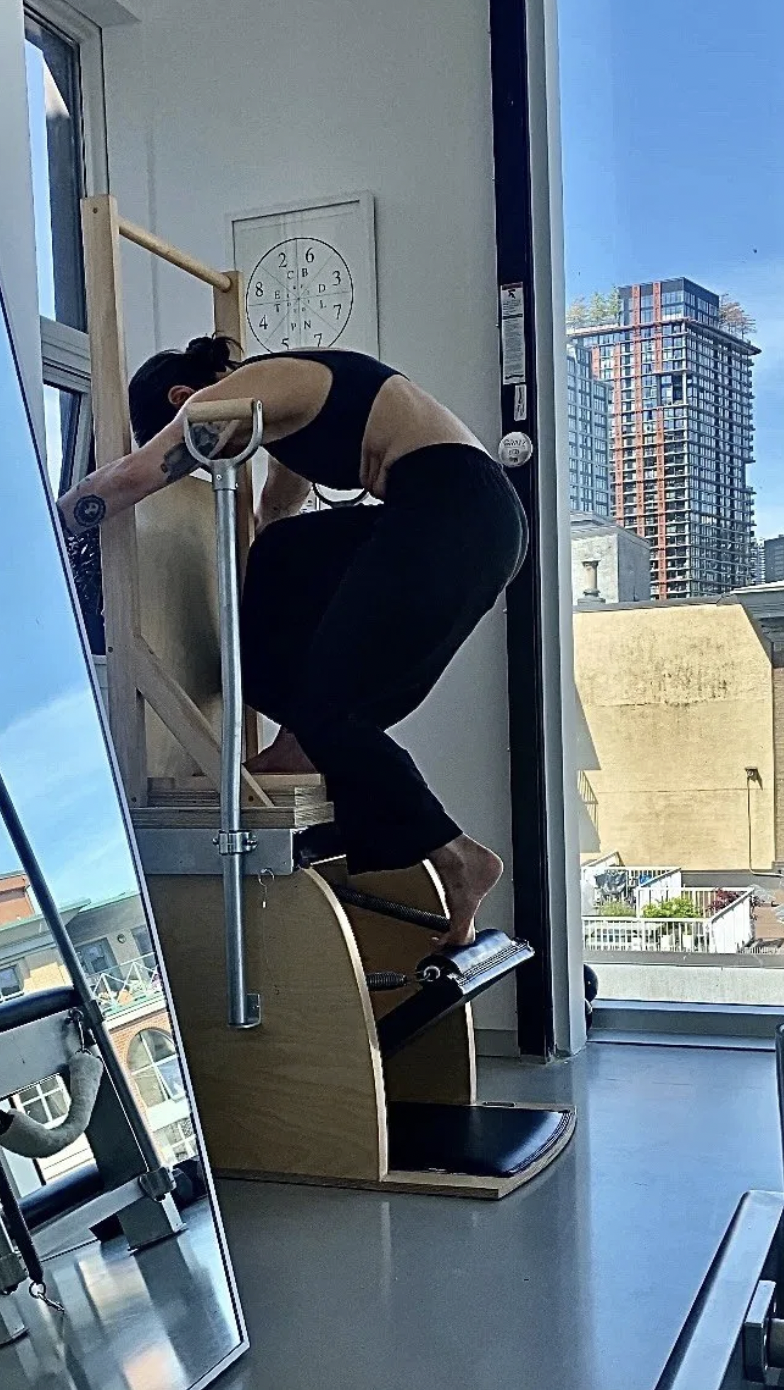
Classical Pilates follows a considered progression: exercises are connected and sequenced, and each movement has a purpose within the larger practice. Rather than treating the Reformer as a workout prop, Contrology uses a range of apparatus to support, challenge, and provide feedback.
A note of honesty: "Classical Pilates" has become a marketing buzzword, and not every class using the label is the same. Contrology, the practice Joseph Pilates originally named and taught, is distinctly different in what it asks of the student. Its purpose is to empower you with self-awareness: to understand your own body, your own spring settings, your own corrections, so that over time you need us less, not more. The goal is independence. A class that keeps you dependent on the instructor's cues forever has missed the point.
Springs provide resistance and support. On a Classical Reformer, the springs attach to one side of the frame. Depending on the exercise and spring setting, that resistance can assist a movement or make it more demanding. An instructor guides you to understand the movement to suit your body, helping you build strength while improving awareness of alignment and control.
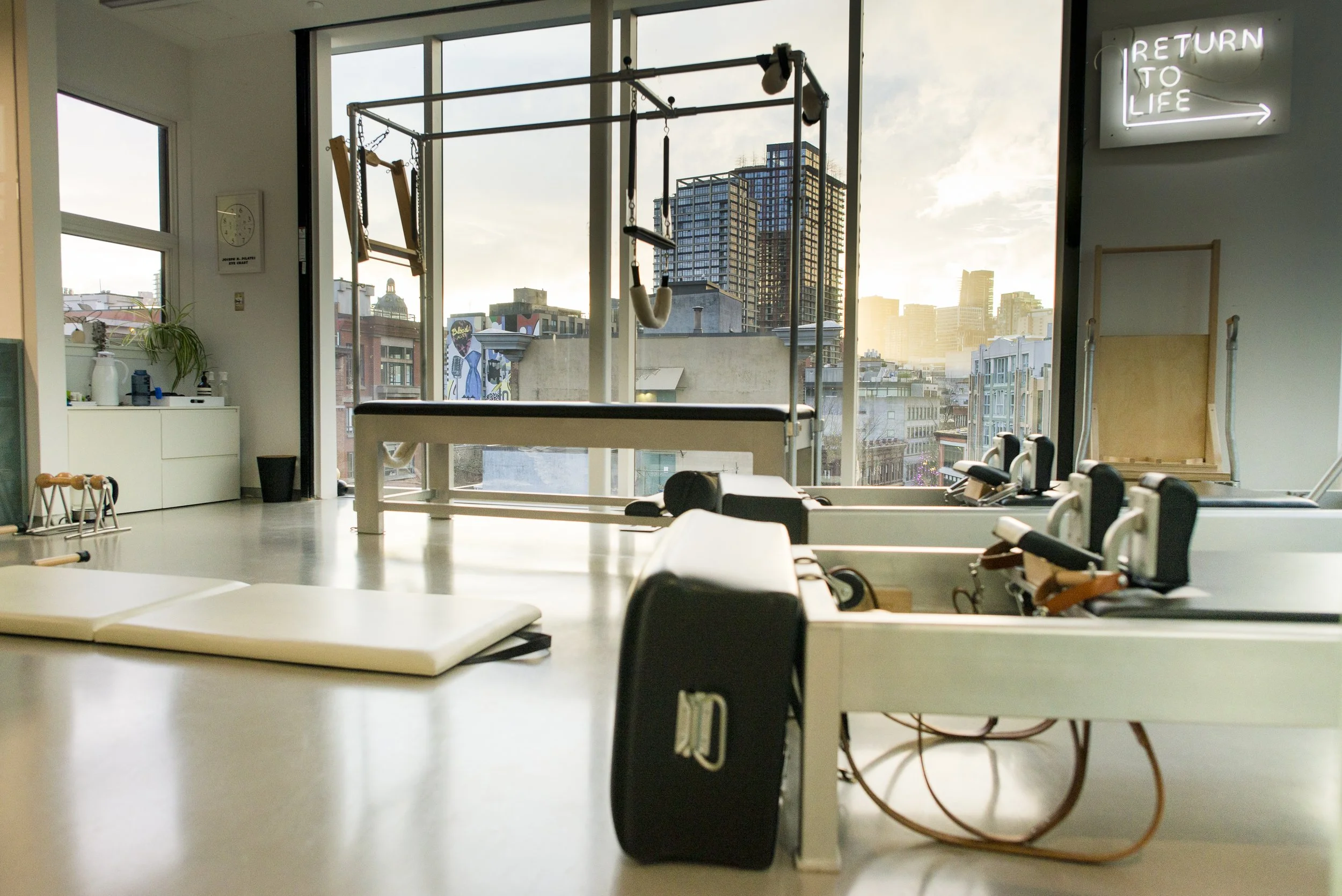
At rhṓmē Contrology Studio in Gastown, Vancouver, sessions are tailored to the individual. We use authentic Pilates apparatus, including Balanced Body Contrology by Jay Grimes and Gratz equipment. You can learn more about the studio and its approach to structured, corrective movement.
A beginner’s practice, thoughtfully progressed
There is no single timeline that suits everyone. Consistency matters, but so does giving your body room to learn. A few principles can help guide your practice:
Choose quality over quantity. Begin with a small number of controlled repetitions. When you can keep your breathing and alignment steady, you may be ready to add more.
Keep breathing. Avoid bracing or holding your breath. Let your breath support the rhythm of each exercise.
Work in a comfortable range. A smaller movement that you can control is more valuable than larger movements.
Notice what changes. Pay attention to how your body feels during the movement, not just how many repetitions you complete.
Build gradually. Increase range, repetitions, or complexity one step at a time.
The Hundred, Roll Up, Teaser, and other familiar Pilates exercises may be part of a classical repertoire, but their names do not make them beginner exercises. Many require substantial coordination and strength. A good teacher helps you prepare rather than rushing you through them.
What does the research say?
Research on Pilates suggests it can be one way to train strength, but it does not establish that Pilates is better than every other exercise method. A 2022 systematic review of 11 studies found no statistically significant difference between Pilates and other exercise approaches for several measures of muscle strength. The authors also noted that the available evidence was low to very low in certainty, and that the studies did not separate mat Pilates from apparatus-based work. You can read the systematic review.
In one randomized trial, a Pilates program and a resistance-training program were studied in independent women aged 60 to 80. Both groups showed improvements in some strength measures over 18 weeks, while the results varied by test and group. The study is a helpful example of why exercise should be viewed in context, not as a guaranteed result or a replacement for individual guidance. Read the trial.
There is also a deeper limitation worth naming: the studies behind these findings almost certainly tested generic, commercially adapted Pilates, not the classical method. Classical Pilates is a different practice in both approach and demand. It follows the original exercise sequence, requires genuine strength and control from the first session, and uses the full apparatus system rather than a simplified "Reformer Pilates" routine. Research on Contemporary Pilates or Lagree cannot tell you what disciplined, classical training asks of your body, or what it can build.
The practical takeaway is clear: the most suitable exercise is the one that meets your needs, offers a sensible progression, and supports a practice you can continue.
When private and semi-private instruction can help
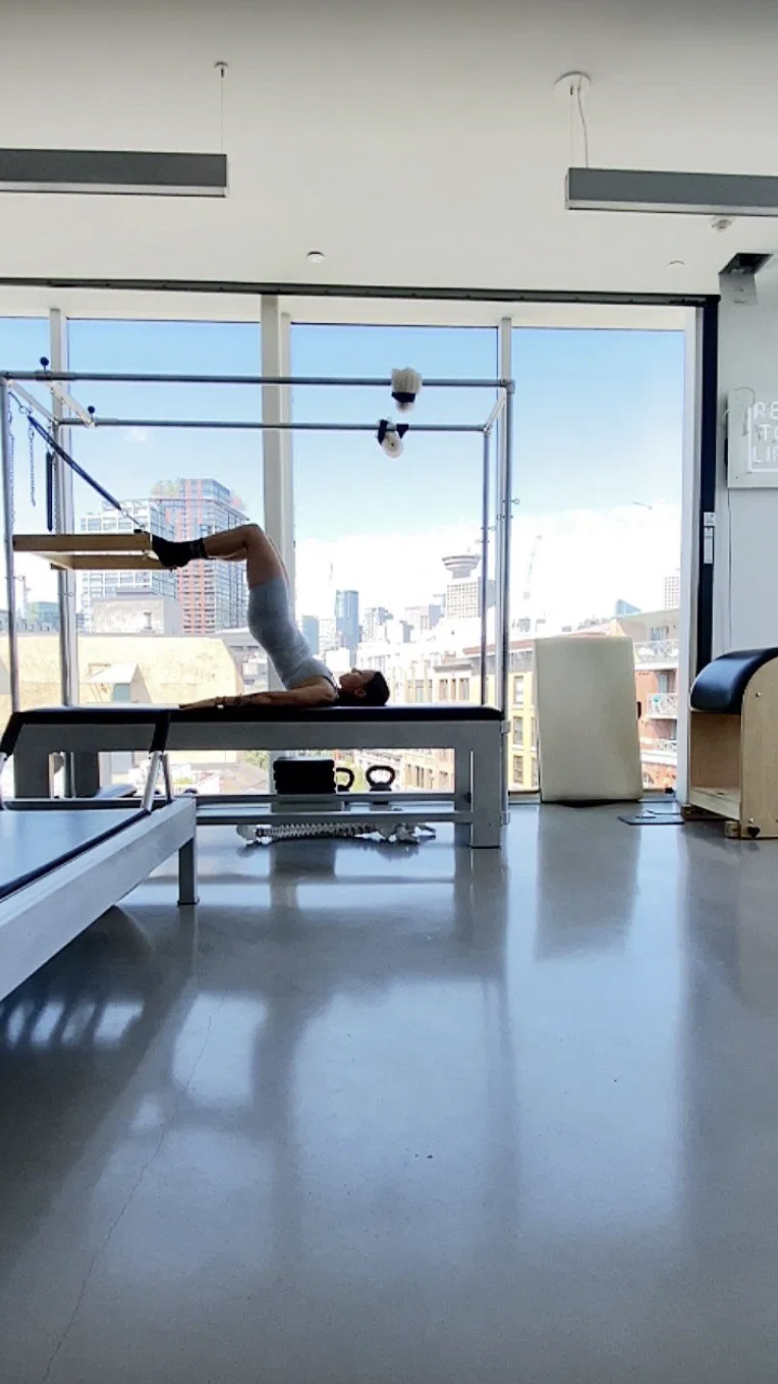
Private Cadillac work, tailored to the individual.
A private or semi-private session can be especially useful when you are new to Pilates, returning to movement, or seeking a more corrective approach. In a small session, the instructor has the time to observe how you actually move and teach to your body, rather than delivering one general program to a full room.
This is where small-group training stands apart from the typical studio class. Overpacked classes, by necessity, teach a diluted and generic program: one sequence, one pace, one spring setting for everyone, with little room for individual correction, and no path toward the self-awareness and independence that Contrology is built to develop. It may be "Classical Pilates" in name, but not in practice.
In a well-supported session, progress is not measured by how quickly you reach a difficult exercise. It is measured in steadier movement, clearer coordination, and the confidence to use your strength in daily life.
At rhṓmē, our private and semi-private classical Pilates sessions offer a structured, personalised introduction to the method. If you are ready to explore, view appointments and find a starting point that feels right for you.